
Most households plan the move in detail and plan the unpacking not at all. Boxes land in the right rooms, the crew leaves, and what follows is six weeks of living out of cardboard while the kitchen slowly becomes usable. The work itself is not difficult. The reason it drags is that nobody decided an order before the truck arrived.
We finish moves across Santa Clarita, CA every week and see which households are settled in three days and which are still unpacking in October. The difference almost always traces back to decisions made during packing rather than to effort afterward. Our crews have worked this valley since 1996, and these are the habits that separate the two outcomes.
Decide Your Room Order Before the Truck Arrives
Unpacking without a sequence means opening whatever box is closest, which spreads half-finished rooms across the whole house. A fixed order keeps the mess contained and gives the household somewhere functional to retreat to at the end of each day. Beds go up on day one, because a household that sleeps properly works faster the next morning than one that did not.
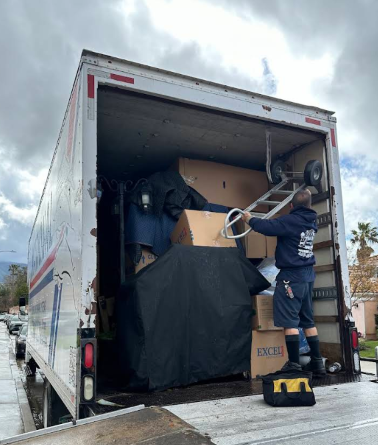
Bedrooms and bathrooms come first, kitchen second, shared living space third, and garage, storage, and decorative items last. Offices fall wherever work demands, which for people working from home often means slotting it right behind the kitchen. The rooms nobody needs immediately can sit boxed for two weeks without costing anything, and holding that line is what prevents the whole house from being half unpacked at once.
Pack With the Unpack in Mind
The fastest unpacks are set up weeks earlier. Boxes labeled with a destination room and a short contents note let a crew place them correctly and let you open the right one first. Boxes labeled only “kitchen” force you to open all eleven to find the coffee maker, which is the single most common self-inflicted delay we see.
Keeping categories together matters just as much as labeling. Items used together should travel together, so a box yields a working function rather than a scattering of unrelated objects. Every box is labeled by room and contents as it is sealed whenever a professional unpacking service empties and places boxes, which is the same discipline worth applying when a household packs itself. Crews complete the American Moving and Storage Association Certified Packer Loaders Program, and labeling standards are part of that training rather than an afterthought.
Short on time at the destination? Our crews unpack as well as pack, and can have a household functional in a fraction of the time.
Set Up a First Night Box and an Open First Zone
One box or bag should travel with you rather than on the truck, holding what the household needs before anything is unpacked. Prepared in advance, it removes the frantic search that otherwise ends the first day. Everything in it should be what you would need in a hotel room, plus what makes a house livable the next morning, and it belongs alongside the rest of your moving checklist for SCV households.
Keep these together and keep them with you:
- Bedding for each bed, plus towels for one bathroom
- Toiletries, medication, and a change of clothes per person
- Phone chargers, a basic tool kit and a box cutter
- Coffee setup, a few plates and utensils, trash bags and paper towels
- Documents, keys, and anything irreplaceable
Designate one corner of the living room as the staging area for empty boxes and packing paper so debris never spreads into rooms you have already finished.
Short on time at the destination? Give us a call at 661-254-7823, and we’ll tell you how our crews can unpack your Santa Clarita home and have your household functional in a fraction of the time.
Work in Full Boxes, Not Partial Ones
Half-emptied boxes are the main reason an unpack stalls. A box opened, partially unloaded, and pushed aside stays in the room for weeks, and a house full of those feels permanently unfinished even when most of the work is done. Open one box, empty it completely, break it down, and only then open the next.
Breaking boxes down as you go also keeps the floor clear, which matters more than it sounds in a house where furniture is still being positioned. Households that organize packing boxes by room from the start finish this stage fastest. Flattened cardboard stacks against a wall and take minutes to handle at the end, while intact empty boxes consume the same space as full ones and hide what is left to do. Households that follow this one rule usually finish a kitchen in an evening rather than across a weekend.
Place Furniture Before You Fill It
Furniture should be positioned and assembled before anything goes into it. Moving a loaded dresser or a filled bookshelf across a room risks the furniture, the floor, and whoever is pushing, and in a new home the layout rarely survives first contact with the actual space. Decide where pieces live while they are still empty and easy to shift.
This is also the point to let the crew do the work included in your move. Our crews disassemble and reassemble furniture as part of the job, place pieces where you direct rather than where the truck unloaded them, and use carpet shield and doorframe protection at the destination as well as the origin.
Customers often rush through the walkthrough while the crew is still on site, then spend the next weekend moving heavy items themselves. Our general manager, Ben Strength, coordinates these details ahead of time, and the written estimate states what is included with no hidden fees, so nothing is left ambiguous once the truck is empty.
Planning a move in the SCV? Call our Santa Clarita team at 661-254-7823 or stop by 25701 Springbrook Ave, Santa Clarita, CA 91350, and book a free in-home estimate. Ask about unpacking while you’re at it. We’re open Monday through Saturday, 8:00 AM to 5:00 PM.
Related Topics:
- What Are the Most Common Moving Mistakes in Santa Clarita?
- Office and Commercial Moving in Santa Clarita, CA