
Storage rarely makes the shortlist during the early stages of planning a move, even though it probably should. Working with a dependable moving and storage company can make a real difference once the realities of relocation start setting in. Closing dates shift, new homes are not always ready when everyone expects, and the gap between move-out and move-in tends to catch people off guard. Having trusted storage solutions ready before you actually need them feels very different from scrambling for options the week before you have to be out.
Here is a look at the main storage options available for Santa Clarita moves, what each one is suited for, and what to pay attention to before committing.
Why Storage Gaps Come Up So Often in Santa Clarita Moves
The Santa Clarita real estate market moves fast, and that speed creates timing problems. A buyer might close on a new home before their current property sells. A lease might end before the purchase closes. A seller might need to vacate before the new owners are ready. Renters face this too. Lease-end dates and move-in dates at a new apartment often miss each other by a week or two, which feels like a minor gap until you are the one who has to solve it.
Beyond timing, some moves benefit from a staged approach. A large home moving into a smaller one, a family navigating a rental transition, or a business relocating while a new space gets built out all benefit from having somewhere to hold belongings while the next phase comes together.
In-House Mover Storage vs. Third-Party Facilities
When your moving company also operates a storage facility, your items go from your home directly into storage under one company’s care and come back out the same way. No separate truck pickup. No coordinating with a different vendor for final delivery. One point of contact throughout.
That matters more than it might seem. When items transfer between companies, accountability gaps open up. If something arrives at a third-party facility in good condition and leaves damaged, determining who is responsible gets complicated fast. In-house storage keeps the chain of custody clear and keeps one company accountable for everything.
Third-party storage, by contrast, means your mover delivers your belongings to a separate facility and you then coordinate a different company for final delivery to your new home. It works as a process, but it adds a vendor relationship and coordination responsibility to an already demanding transition.
Portable Storage Containers: When They Make Sense
Portable containers, delivered to your driveway and loaded on your own timeline, work well for specific situations. They suit customers who want flexibility in their packing schedule, local moves where the container can be delivered and picked up within the same area, or situations where keeping some items accessible at the current location for an extended period is useful.
The limitations are real, though. Access to your items once a container has been picked up and transported to the company’s facility varies by provider, and same-day or short-notice access is often not an option. Weather is a factor during loading if the container sits outside. For larger homes, multiple containers add up in cost faster than most people expect.
Containers tend to work well for moderate-sized local moves with flexible timelines. They are less well-suited to large homes, long-distance relocations, or situations where you need reliable ongoing access to stored items during the storage period.
Self-Storage Units: What to Know Before You Rent
Renting a self-storage unit gives you direct, on-demand access to your items, which is the main appeal. You are the one who moves things in, organizes the space, and moves things out.
The trade-off is that you are also responsible for all the logistics: getting items from your home to the unit, managing the space so things are retrievable when you need them, and then moving everything to the new location either yourself or with a second moving crew. For people who want that level of control and do not mind the added coordination, it is a workable option.
In Santa Clarita, self-storage options exist across Valencia, Canyon Country, and Newhall at different price points. Climate-controlled units add cost but are worth considering for wood furniture, electronics, artwork, and anything sensitive to temperature swings. The SCV sees more temperature variation than many coastal areas, and that matters over a storage period of more than a few weeks.
What to Verify in Any Storage Option
A few things are worth checking regardless of which type of storage you are considering.
Security setup matters more than the marketing language around it. Ask specifically about surveillance coverage, who has access to the facility during off-hours, and whether staff is on-site or the location is unstaffed in the evenings. A camera at the entrance is not the same as internal 24-hour monitoring.
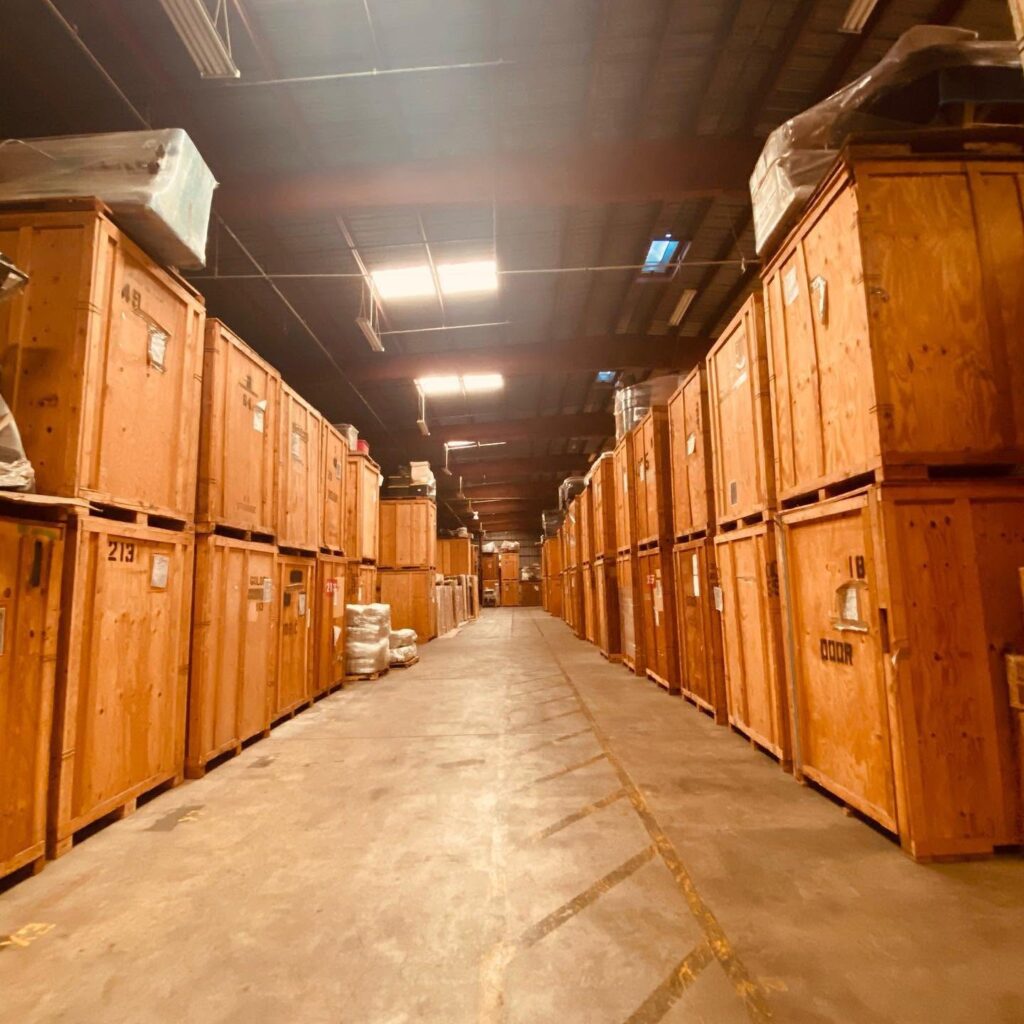
Ask whether your belongings go into a private vault or a shared container. In some storage operations, your items are combined with other customers’ belongings. In a private vault setup, your space is dedicated and only your moving company accesses it.
Ask about the access policy during the storage period. If you need to retrieve something, how does that work? Is there a scheduling requirement? A fee? Can it happen same-day?
Ask about minimum duration requirements. Some storage providers require a 30-day or longer minimum. If your gap is two weeks, that changes the cost picture.
How Our Storage Works
Our storage facility in Santa Clarita operates on a straightforward model. Your items are loaded from your home onto our trucks and moved directly into sanitized, private vaults under 24-hour internal surveillance. When you are ready, we deliver them to your new home. Nothing leaves our care in between.
We have been running this storage facility alongside our moving operations since 1996. Storage here is not a side service added to fill gaps in the schedule. It is part of how we operate, designed to handle exactly the timing situations that come up most often in Santa Clarita real estate transactions.
There is no minimum storage duration. Whether you need two weeks or several months, the arrangement fits your actual situation.
For customers whose moves we handle, the first two months of storage are included at no charge. That covers the gap in the large majority of local real estate transitions without adding a separate cost. If you are weighing storage as part of an upcoming move, the right time to talk through the options is during the estimate, so the storage plan gets built into the move logistics from the start.
Related Topics: